 Magnesium oxide_magnesium hydroxide_magnesium carbonate manufacturer-Zehui Group

What Is the Chemical Formula for Magnesium Hydroxide? Simple Explanation
What is the chemical formula for magnesium hydroxide? It’s Mg(OH)₂ — a common base used in antacids, wastewater treatment, and flame retardants. Get the full breakdown here.
I’ve been working with magnesium compounds long enough to know that people ask what is the chemical formula for magnesium hydroxide for very practical reasons.
You’re probably checking before ordering material. Or writing a report. Or formulating a product and need to confirm the exact composition.
The answer is straightforward:
The chemical formula for magnesium hydroxide is Mg(OH)₂
That’s it. Mg(OH)₂ — one magnesium ion and two hydroxide ions.
Breaking Down the Formula Mg(OH)₂
Let’s make sure everyone understands what those symbols actually mean:
- Mg= Magnesium (atomic number 12, group 2 alkaline earth metal)
- (OH)= Hydroxide group (oxygen + hydrogen bonded together)
- ₂= Two hydroxide groups are attached to each magnesium
So the full compound is one magnesium atom bonded to two separate hydroxide ions.
This gives magnesium hydroxide a total of:
- 1 magnesium atom
- 2 oxygen atoms
- 2 hydrogen atoms
Molecular weight ≈ 58.32 g/mol
Why Magnesium Hydroxide Is Written as Mg(OH)₂ (Not MgOH₂)
The parentheses are important.
They show that the hydroxide (OH) is a distinct polyatomic ion and that two of them are needed to balance the +2 charge of the magnesium ion (Mg²⁺).
Writing it as MgOH₂ would be chemically incorrect — it would imply something completely different.
Correct ionic form: Mg²⁺ + 2(OH⁻) → Mg(OH)₂
How Mg(OH)₂ Looks in Real Life
Most people first encounter magnesium hydroxide as a white, milky suspension called Milk of Magnesia.
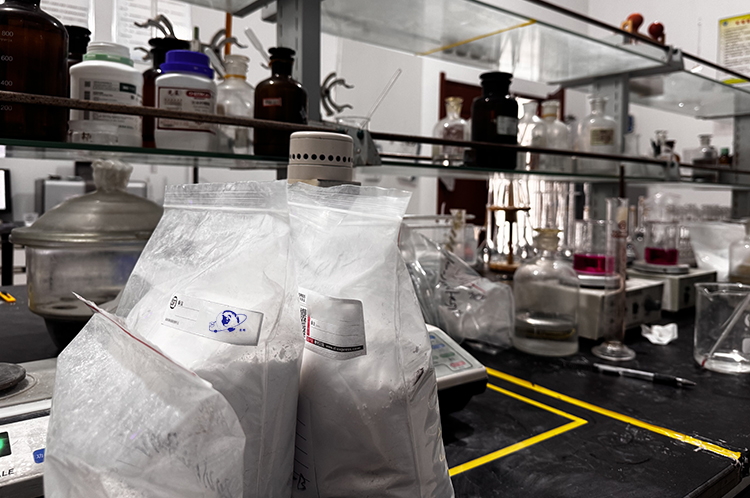
Here are some typical examples of commercial magnesium hydroxide powder and suspensions:
It’s almost always a suspension in water because the compound is very sparingly soluble — only about 0.0009 g dissolves per 100 mL of water at room temperature.
That’s why it looks cloudy — tiny solid particles floating around.
Common Uses That Rely on the Mg(OH)₂ Formula
The exact formula matters because it determines behavior:
- Antacid— Mg(OH)₂ + 2HCl → MgCl₂ + 2H₂O Neutralizes stomach acid gently and safely.
- Laxative— The low solubility creates an osmotic effect in the intestines.
- Flame retardant— When heated, Mg(OH)₂ decomposes: Mg(OH)₂ → MgO + H₂O Releases water vapor that cools and dilutes flames.
- Wastewater treatment— Raises pH slowly and precipitates heavy metals as hydroxides.
A quick real-world example:
I once had a wastewater plant operator call me in a panic. Their pH was swinging wildly with sodium hydroxide. We switched to magnesium hydroxide slurry. The pH stabilized beautifully around 9–10 because of the low solubility and self-buffering nature of Mg(OH)₂.
One formula change, months of headaches gone.
How Magnesium Hydroxide Compares to Related Compounds
Quick reference people frequently ask for:
| Compound | Formula | Type | Solubility in Water | Typical Use Case |
| Magnesium hydroxide | Mg(OH)₂ | Weak base | Extremely low | Antacids, flame retardants |
| Magnesium oxide | MgO | Basic oxide | Very low (reacts slowly) | Refractories, supplements |
| Magnesium carbonate | MgCO₃ | Insoluble salt | Practically insoluble | Fillers, gym chalk |
| Calcium hydroxide | Ca(OH)₂ | Moderately strong base | Low | Mortar, pH adjustment |
| Sodium hydroxide | NaOH | Strong base | Very high | Soap making, heavy-duty cleaners |
You can see why Mg(OH)₂ is chosen when you want controlled, mild basicity.
Frequently Asked Questions
What is the chemical formula for Milk of Magnesia? Milk of Magnesia is a suspension of magnesium hydroxide — Mg(OH)₂ in water.
Is the formula Mg(OH)₂ or MgOH₂? Always Mg(OH)₂. The parentheses show there are two separate hydroxide groups.
Why does magnesium hydroxide have such low solubility? The high lattice energy of the ionic crystal and relatively weak hydration of the ions keep dissolution very limited.
What is the chemical formula for magnesium hydroxide in antacids? Still Mg(OH)₂ — same compound, just pharmaceutical-grade purity and particle size.
Does the formula change when it’s used as a flame retardant? No — it’s always Mg(OH)₂. The heat causes decomposition to MgO + H₂O, not a formula change.
So when someone asks what is the chemical formula for magnesium hydroxide, you can confidently tell them:
Mg(OH)₂ — simple, consistent, and the key to its usefulness across dozens of industries.