 산화 마그네슘 _magnesium hydroxide_magnesium Carbonate Manufacturer-Zehui Group

Discover what magnesium hydroxide is, how it works, and why it’s used in medicine, food, 및 난연제. Learn its benefits, safety tips, and real-life examples.
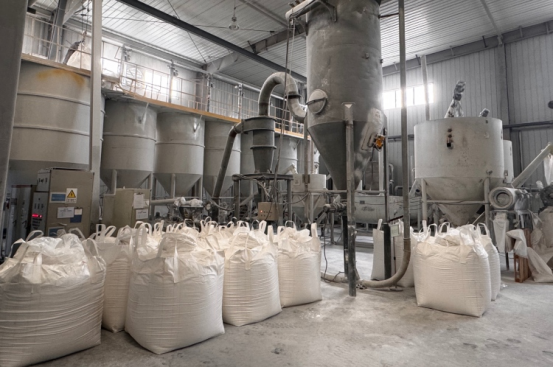
수산화마그네슘이란??
Ever seen “milk of magnesia” on a medicine label or “Mg(오)₂” on a chemical spec sheet and wondered what that means?
That’s 수산화 마그네슘, a white, solid mineral compound that shows up in more industries than most people realize.
In simple terms — it’s a combination of magnesium, 산소, 그리고 수소.
And depending on how it’s processed, it can act as a medicine, food additive, 난연제, or industrial raw material.
Let’s break it down like we’re chatting over coffee.
What Exactly Is Magnesium Hydroxide (Mg(오)₂)?
Chemically, magnesium hydroxide is an 무기 화합물.
Its formula — Mg(오)₂ — tells us it’s made of one magnesium atom bonded with two hydroxide groups.
It usually appears as a white powder or slurry, and it’s only slightly soluble in water.
When mixed in water, it forms a mildly alkaline solution, which is why it’s used as an antacid or laxative 의학에서.
A Quick Fun Fact
Nature provides magnesium hydroxide as a mineral called brucite.
It’s found in metamorphic rocks and can also form naturally in seawater.
Common Uses of Magnesium Hydroxide
Now that you know what it is — let’s talk about what it does.
This one compound serves many purposes, depending on purity and grade.
1. In the Medical Field
If you’ve ever taken an 제산제 좋다 마그네시아 우유, you’ve already used magnesium hydroxide.
It helps neutralize stomach acid 그리고 relieve constipation 부드럽게.
작동하는 이유:
It reacts with stomach acid to form water and magnesium chloride.
장으로 물을 끌어들이는 것입니다., softening stool.
Typical applications:
Over-the-counter antacids
완하제
pH balance formulations
2. In Food Applications
Food-grade magnesium hydroxide is often used as a food additive and acidity regulator.
It keeps certain foods stable, safe, and fresh.
You’ll find it in:
Powdered foods (to prevent clumping)
Beverage processing (for neutralization)
Nutritional supplements (as a magnesium source)
3. In Flame Retardants
Here’s something most people don’t know — magnesium hydroxide is also an eco-friendly flame retardant.
It decomposes at high temperatures, releasing water vapor 그리고 absorbing heat, which slows fire spread.
이익:
무독성
Halogen-free
Environmentally safe
Used widely in:
플라스틱
Cables
Rubber materials
Electronic parts
4. In Industrial and Environmental Applications
High-purity magnesium hydroxide is also used in 폐수 처리.
It helps 산을 중화하다 그리고 remove heavy metals from industrial effluent.
Also applied in:
Pulp and paper bleaching
Ceramic production
Catalyst materials
How Magnesium Hydroxide Is Made
There are several ways to produce it, depending on the target grade.
Common production methods:
- Hydration of Magnesium Oxide (MGO):
MGO + H₂O → Mg(오)₂
(The most common and controllable process) - Precipitation from Seawater:
Seawater magnesium salts + lime → magnesium hydroxide precipitate
3.By-product recovery:
From industrial or brine sources.
Why Purity Matters
Not all magnesium hydroxide is created equal.
Purity determines what it can safely be used for.
| Grade Type | Typical Purity | 응용 |
| Industrial Grade | ~90% | Wastewater, 난연제 |
| High Purity | >95% | Chemical intermediates, fillers |
| Food Grade | >98% | Food processing, 보충제 |
| Pharmaceutical Grade | ≥99% | 제산제, medical uses |
Pro tip: Always check the supplier’s certificate of analysis (COA) before use.
Safety and Handling Tips
Even though magnesium hydroxide is considered safe and non-toxic, handling large quantities still requires care.
Avoid inhaling fine powder. Use a mask or respirator in industrial settings.
Store in a dry environment. It can absorb moisture and clump.
Follow local chemical safety regulations.
For personal use (like medicine), follow labeled dosage — don’t self-adjust.
실제 사례:
When I first worked with magnesium hydroxide at a chemical plant, we used it to improve smoke suppression in PVC cable compounds.
The results were impressive — cleaner burns, less smoke, and no toxic halogen emissions.
Later, I saw the same compound in my medicine cabinet as an antacid.
Same formula, different purity, different purpose.
That’s the beauty of chemistry — one compound, endless potential.
FAQs About Magnesium Hydroxide
1. Is magnesium hydroxide safe for humans?
예, in proper doses. Pharmaceutical-grade Mg(오)₂ is FDA-approved for use as an antacid and laxative.
2. 수산화마그네슘과 산화마그네슘의 차이점은 무엇인가요??
Mg(오)₂ is the hydrated form of MgO.
Magnesium oxide turns into magnesium hydroxide when it reacts with water.
(You could link to your “Magnesium vs. Magnesium Oxide” comparison article here.)
3. Can magnesium hydroxide be used in eco-friendly materials?
전적으로. 그것은 halogen-free flame retardant widely used in green polymers 및 코팅.
4. How is food-grade magnesium hydroxide different from industrial grade?
Food-grade Mg(오)₂ is purified, tested for heavy metals, and meets food safety standards.
Industrial grade doesn’t — it’s designed for chemical processes.
5. Is magnesium hydroxide the same as milk of magnesia?
Yes — 마그네시아 우유 is simply magnesium hydroxide suspended in water.
Conclusion: The Power of Magnesium Hydroxide
에서 antacids to flame retardants, magnesium hydroxide is one of the most versatile and eco-safe compounds in modern use.
Its chemistry might be simple, but its impact spans across medicine, food, environment, and materials science.
If you’re sourcing or learning about Mg(오)₂, remember this:
Purity, particle size, and production method make all the difference.
And that’s what makes magnesium hydroxide — simple formula, endless possibilities.


Nice Post.